Gate Change: How to Read a Casino Lobby the Way a Frequent Flyer Reads a Departure Board
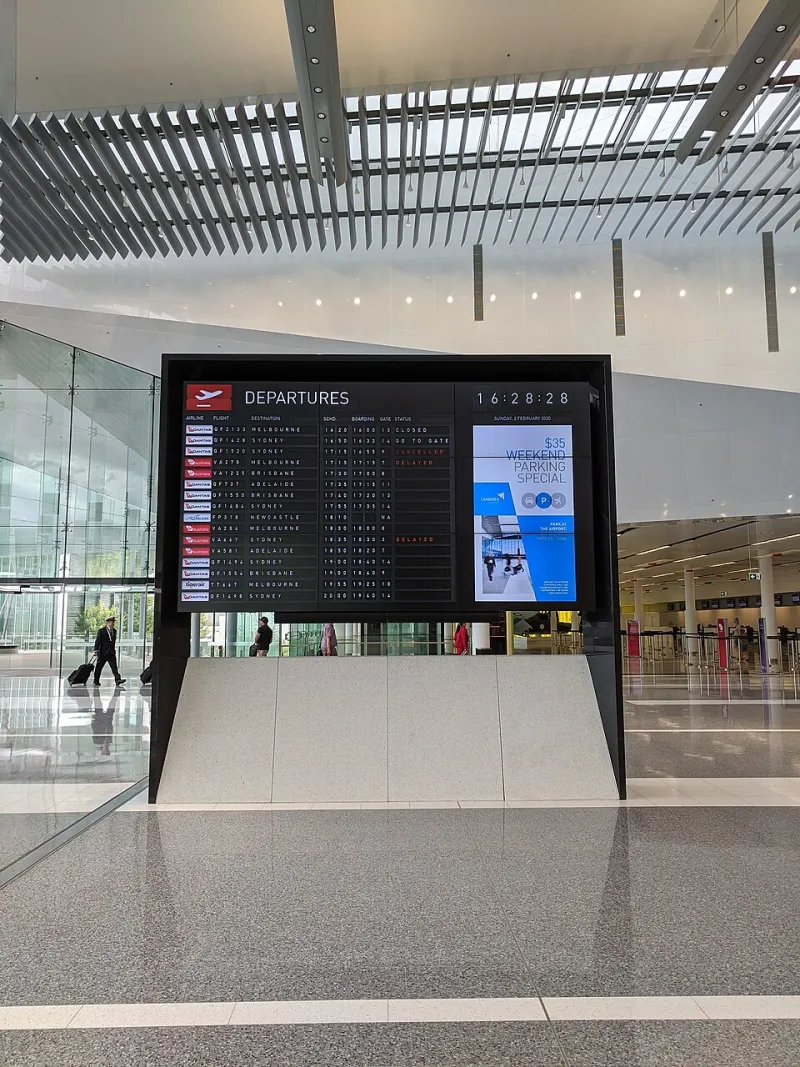
Photo: Nick-D, CC BY-SA 4.0, via Wikimedia Commons
Walk into any airport in America and you'll see them: seasoned travelers who glance up at the departure board for ten seconds, absorb everything they need to know, and head straight for the right gate. No wandering. No second-guessing. They've learned that the board tells you almost everything — if you know what to look for.
A casino lobby works the same way. Most casual players open one up, see a wall of flashing thumbnails, and start clicking on whatever looks shiniest. That's like showing up at DFW and booking the first flight with a pretty livery. You might get somewhere good. You probably won't.
Here's how to read the board like a pro.
The Status Column: RTP Is Your On-Time Percentage
Every flight has an on-time record. Every slot has an RTP — return to player — and it's the closest thing the casino world has to a punctuality stat. A game running at 96% RTP gives back, on average, 96 cents of every dollar wagered over the long haul. A game at 92% is running late before it ever leaves the gate.
You don't need to do math mid-scroll. Just build a quick mental filter: anything 96% or above is a smooth flight. Low-to-mid 90s means turbulence ahead. If a lobby doesn't display RTP anywhere — in the game info screens, in a help section, anywhere — treat that like an airline that won't tell you the flight duration. It's not automatically a scam, but it earns suspicion.
The Weather Report: Volatility Tags
Some boards show weather at your destination. Slots show volatility, and it tells you what kind of trip you're signing up for.
Low volatility is a nonstop flight with beverage service. Small, frequent wins. Your bankroll drifts along gently. Great for a 20-minute session on a lunch break.
High volatility is the red-eye with a layover in Denver. Long stretches of nothing, then a sudden jackpot that makes the whole trip worth it — maybe. If you've got a $20 bankroll and a short window, that's a rough itinerary.
Neither is better. What matters is matching the flight to the trip. A casual player with limited time and a modest stake usually wants low-to-medium volatility, the same way a two-hour hop to Chicago doesn't call for connecting through Atlanta.
Gate Assignments: Why Categories Matter More Than You Think
A good departure board groups flights logically, and a good lobby groups games logically. When you open a lobby, look at how it's organized before you look at any single game.
Is there a clear split between slots, table games, and live dealer? Can you filter by provider, by feature, by new releases? Lobbies that invest in real categorization are usually lobbies that invested in the back end too — clean payouts, working bonuses, responsive support. A chaotic lobby where everything is jumbled together is the digital equivalent of a terminal with no signage. You can still fly out of it. But why would you?
Spotting the Delayed Flights
Every board has them: flights quietly bumped to a later slot. Casino lobbies have them too, and here's your checklist for spotting the games and offers that are stuck on the tarmac.
Wagering requirements buried in fine print. A bonus advertising itself in giant letters with its terms in six-point font is a delayed departure. The bigger the headline, the harder you should look for the asterisk.
Games that won't tell you the rules. If you have to dig through three menus to find paytable information, that's a game stalling at the gate.
Withdrawal terms that read like a weather advisory. Payout limits, processing windows, verification hoops — the lobby's payment page tells you how the airline treats you after landing. Read it before you buy the ticket, not after.
Countdown timers on everything. Constant urgency is a boarding announcement that never stops. Real promotions don't need a ticking clock in every corner to move seats.
Your Two-Minute Pre-Flight Routine
Here's the whole thing compressed into a routine you can run before your next session:
- Check the board. Scan categories and filters. Is this lobby organized or chaotic?
- Check the weather. Look up volatility on your candidate game. Match it to your session length and bankroll.
- Check the on-time record. Find the RTP. Ninety-six percent or better is your friend.
- Check the fine print. Bonus terms and withdrawal rules, read before you deposit, not after.
- Pick your gate and go. One game, one plan, one session.
None of this takes the fun out of it. Ask any road warrior — knowing how to read the board is exactly what lets them relax on the plane. The players who do a two-minute scan before they play are the ones who get to actually enjoy the flight, because they picked it on purpose.
The board is right there. Now you can read it.