Hands Off the Yoke? No — Hands On: Reclaiming Attention From the Casino Autopilot
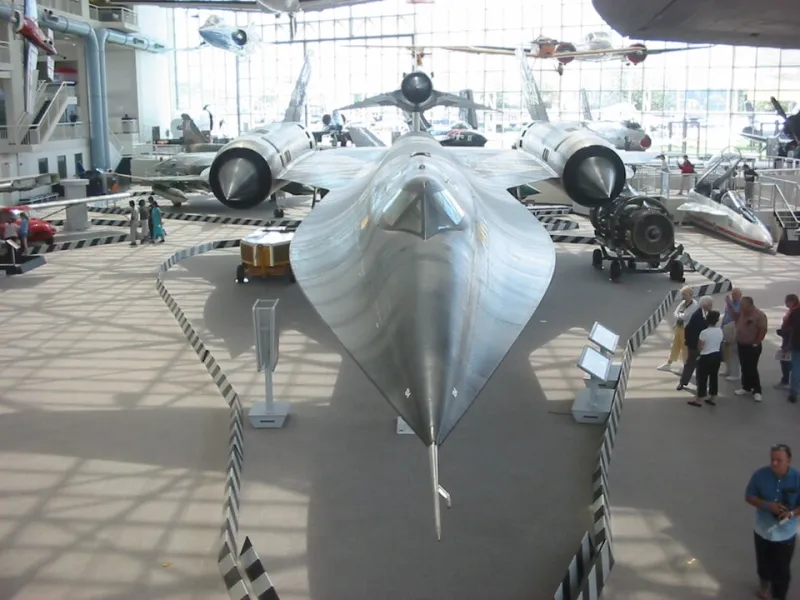
Photo: Bill Abbott, CC BY-SA 2.0, via Wikimedia Commons
Somewhere over the Midwest at 36,000 feet, a pilot is drinking coffee while the airplane flies itself. Nobody panics. Autopilot is a marvel of engineering — but here's the thing every aviation nerd knows: it's a tool for a trained human, not a replacement for one. The moment the pilot stops monitoring, the system stops being a convenience and becomes a liability.
Now walk with me into the average online casino lobby in 2025. Autoplay toggles. Turbo spin buttons. Bet sizes pre-loaded at whatever you wagered last time. Everything is engineered so you never have to lift a finger. Sound familiar? It should. Casino games are increasingly designed to be played on cruise control — and that's exactly when casual players get into trouble.
The Machine Wants You Zoned Out
Let's be honest about what autoplay is for. It's not for accessibility (though that's the pitch). It's for throughput. Every feature that removes a decision from your session — the confirm click, the spin button, the pause between rounds — removes a moment where you might reconsider.
Turbo mode is the sneakiest of the bunch. A standard spin takes a few seconds; turbo cuts it to a blur. Over an hour, that's potentially hundreds of extra rounds. Your bankroll doesn't just drain — it sprints. And because the animations fly by, your brain never gets the chance to log what's happening. It's the difference between driving through a neighborhood and taking the highway at 80. Same distance, wildly different awareness.
Default bet sizes are the third leg of the stool. You deposited $40, played a few bucks a spin, came back Tuesday — and the game helpfully remembered $2.50 per spin. No decision required. No moment of "wait, is this still the right amount for me today?" The default isn't neutral. The default is a suggestion, and you're accepting it every time.
What Aviation Actually Teaches Us
Here's where the autopilot comparison earns its keep. In a real cockpit, autopilot comes with a non-negotiable rule: the pilot never fully disengages. There are checklists, callouts, altitude alerts. The system assists; the human decides. When automation fails — and it does — the trained response is to grab the yoke, not scroll your phone.
Casual players do the opposite. We start a session engaged, making deliberate choices. Twenty minutes in, we're watching TV with one eye, tapping spin with a thumb, running on pure muscle memory. The game is flying itself, and so are we.
The problem isn't the automation. It's the absence of a monitoring routine.
Four Manual Override Habits That Actually Stick
I've tested these over a few weeks of short sessions, and they're deliberately small. Habits that require willpower fail. Habits that require a finger tap survive.
1. Kill turbo mode — permanently. Go into your game settings right now and turn it off. Not "today," but as a standing rule. The extra seconds per spin aren't a cost; they're the price of awareness. If a game's pace feels unbearably slow without turbo, that's not boredom talking. That's information.
2. Set a phone alarm before your first spin, not after. Decide your session length while you're still rational — say, 25 minutes — and set the alarm then. Deciding "one more minute" at minute 40 is like negotiating with yourself at 2 a.m. You will lose.
3. Do a one-breath check every ten spins. Seriously, count roughly. One slow breath, three questions: What's my balance? What's my bet size? Do I still want to be here? If any answer surprises you, that surprise is the finding. Reset or walk.
4. Re-confirm your bet every session. Before the first spin, manually select your bet size even if it matches yesterday's. It takes five seconds and breaks the autopilot chain at its strongest link — the assumption that today's session is the same as the last one.
The Uncomfortable Part
None of these tricks change the odds. The house edge is the house edge, and no breathing exercise turns a slot into a winning proposition long-term. What these habits change is drift — the slow, unnoticed slide from "I'm playing for 20 minutes with $25" to "somehow it's 11 p.m. and the deposit button is right there."
Autopilot in a plane exists because the alternative — a human hand on the yoke for eight straight hours — is exhausting and error-prone. Casino autoplay exists because a human pause between spins is profitable to remove. One system is built to protect you from fatigue. The other is built to exploit it.
That doesn't make you a sucker for using these features. It makes you normal. But normal, unmonitored, cruise-control play is how $40 becomes $140 faster than you can say "one more bonus round."
Take the Stick
There's a reason flight instructors drill the phrase "aviate, navigate, communicate" — in that order. Fly the plane first. Everything else comes after. Your casino version might be: check the balance, check the clock, then check the lobby.
The games will always offer you cruise control. That's fine — cruise control is a legitimate feature. Just remember who's supposed to be in the cockpit. It was never the machine. It was always you, one breath away from the yoke.